Terracotta Roof Restoration for Melbourne Homes
Restoring terracotta starts with understanding the existing clay tiles, their surface and the details that keep water out. Melbourne Roofing assesses whether repair and careful cleaning can retain a serviceable roof, rather than treating terracotta as another concrete tile painting job.
Bottom line: terracotta restoration should respond to clay and glaze condition. Suitable tile replacement, ridge work and attention to flashings may be more important than changing the finish, and a generic coating package is not the starting point.
Read the clay and surface condition together
Terracotta roofs can have different profiles, surface finishes and levels of weathering. Surface growth or an uneven appearance does not, by itself, establish that the covering has failed. Cracking, broken edges and areas where the clay is deteriorating need closer assessment than colour variation.
Where tiles have a glazed surface, its condition matters when considering treatment. Previously applied coatings can also complicate the assessment. Ask which observations relate to appearance and which indicate material damage, so the recommendation is grounded in this roof rather than a standard package.
Retain useful tiles and repair connected details
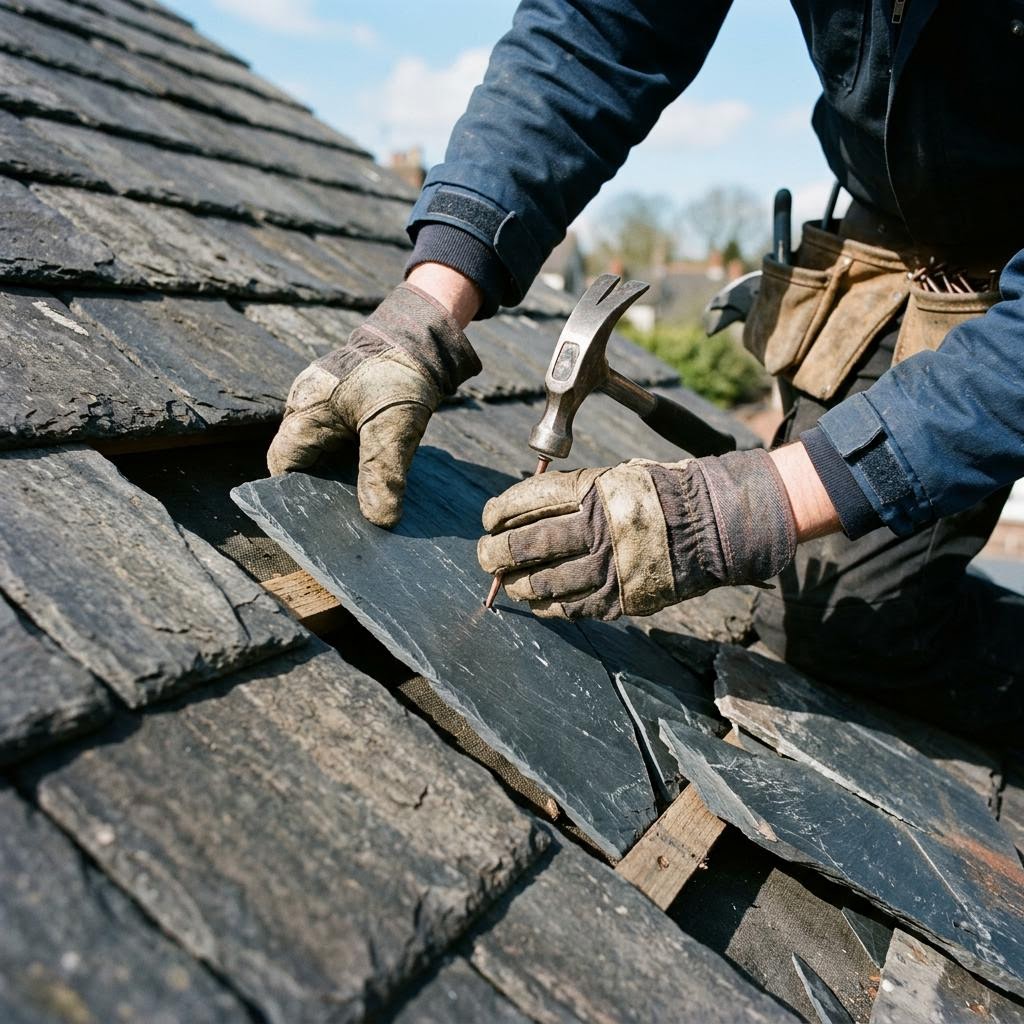
A localised damaged tile may be replaceable without treating the entire roof. Replacement pieces should fit the existing profile and overlaps; colour similarity alone is not enough. Availability and any visible differences should be discussed before the scope is agreed.
Leaks may involve ridge bedding, pointing, valleys or flashings rather than the clay tiles themselves. Those details need their own repair decisions. Repointing can be useful where appropriate, but it does not resolve failing tiles, unstable ridge bedding or a defective flashing junction.
Choose cleaning for the roof, not the package
Cleaning suitability depends on tile and surface condition, previous treatments and vulnerable roof details. The proposed method should account for fragile areas and the risk of disturbing damaged material. Homeowners should not assume that a method suitable for concrete tiles also suits their terracotta.
The aim is appropriate preparation and care, not forcing every tile into a uniform new appearance. Cleaning does not repair cracks or restore lost glaze. If deterioration makes cleaning unsuitable in particular areas, the scope should explain whether repair, replacement or leaving a sound surface undisturbed is more sensible.
Question any proposed change to the finish
Painting is not an automatic stage of terracotta restoration. The existing surface may limit which treatments are suitable, and an unnecessary finish can introduce future maintenance decisions. Any proposed sealing or coating needs a roof-specific explanation of compatibility and purpose.
Ask what problem the treatment addresses and what the roof would need without it. A sound recommendation separates repairs from optional appearance work. It should not present paint as a remedy for damaged clay, a failed glaze or water entering through poorly performing roof details.
Plan for repair limits and the character of the roof
An older terracotta roof may have details worth retaining, alongside areas that no longer perform well. Discuss how repair materials will fit the existing covering and what differences may remain visible. A restoration need not make every tile look identical to deliver useful repair outcomes.
Widespread clay deterioration, limited compatible replacements or concerns beneath the tiles can change the decision. Ask for a clear explanation of restoration versus replacement, including inaccessible areas and any separate specialist assessment needed. Heritage requirements, where relevant, should be checked rather than assumed away.
Frequently asked questions
Does terracotta restoration include painting?
Not automatically. Repairs and suitable cleaning may be the appropriate scope. Any proposed coating needs specific assessment of the clay surface, glaze and previous treatments.
Can cleaning fix deteriorated glaze?
No. Cleaning can remove suitable surface deposits, but it does not rebuild glaze or repair damaged clay. Tile condition should guide what work is practical.
Will replacement terracotta tiles look exactly the same?
An exact visual match should not be assumed. Profile compatibility comes first, and age, finish and available replacements can affect appearance. Discuss those differences before work starts.
Compare the scope, not just the headline
A useful roofing quote explains observed conditions, proposed work, exclusions and the next safe step in plain English.
Check Melbourne service-area information